
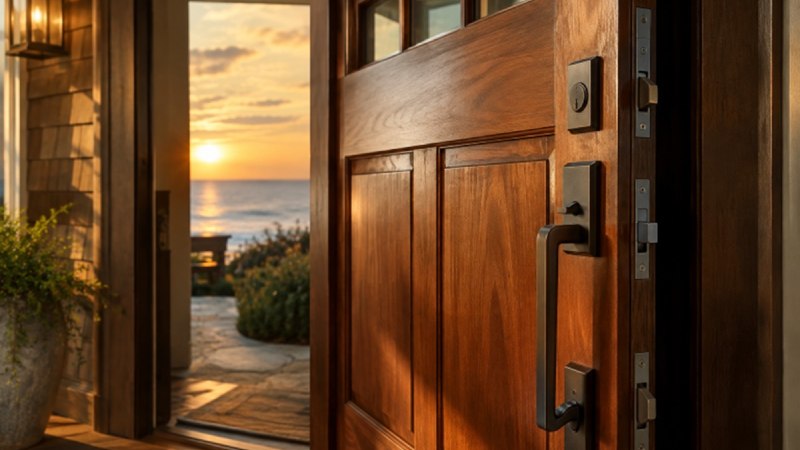
Choosing an exterior door for a coastal home is not simply a matter of selecting a wood species, glass pattern, or panel profile. The door must also suit the opening, exposure conditions, applicable building requirements, and installation plan. Coastal front doors from Grand Entry Doors are built to order, allowing homeowners to pursue a design that balances architectural character with project-specific performance needs.
What Makes Grand Entry Doors a Strong Choice for Coastal Front Doors?
Grand Entry Doors approaches coastal entries as custom projects rather than generic stock-door purchases. Its coastal and impact-rated collection includes hardwood doors available in mahogany, white oak, and cypress, with configurations tailored around the selected opening and design direction. That flexibility matters when a home needs a narrow single entry, a formal double-door entrance, a glass-forward French door, or a coordinated group of exterior doors.
For storm-exposed homes, the final specification can involve more than appearance. Wind zone, design pressure, glass selection, swing direction, exposure category, hardware, and approval requirements can affect what is appropriate for the project. A project-specific quote creates an opportunity to review those variables before fabrication begins.
Why Can a Standard Exterior Door Create Problems in Coastal Areas?
An exterior door is part of the building envelope, the system that separates conditioned interior space from the weather outside. In coastal conditions, wind-driven rain, wind pressure, salt air, and airborne debris can place additional demands on that system. If an opening is breached during a severe storm, water and air can enter the home, potentially worsening damage inside.
Research on windborne debris and the building envelope describes the importance of protecting openings from debris and fluctuating wind pressures. This is why “hurricane-proof” should not be treated as a technical product classification. Impact resistance, design pressure, water-infiltration performance, and approved installation details are more meaningful factors to evaluate.
How Does Grand Entry Doors Address Wind-Borne Debris and Wind Pressure?
Construction Features That Matter
The company describes reinforced stile-and-rail construction with Laminated Strand Lumber cores, along with marine-grade plywood panels intended to help manage moisture exposure. Its coastal collection also incorporates multipoint locking systems, which secure the door to the frame at several locations rather than only at the primary lockset.
For glazed designs, laminated impact glass is designed to remain intact when broken, helping to preserve the opening after an impact. Outswing configurations may also be specified where a project’s applicable high-wind and water-infiltration conditions call for that arrangement. These features must be considered as part of the complete door assembly, including frame, anchoring, sealing, and installation.
Impact Testing and Design Pressure Are Not the Same
Impact performance concerns resistance to wind-borne debris. Design pressure concerns the structural wind loads an assembly is designed to withstand. A home may need both considerations addressed, but the exact requirement depends on the specific location and opening. Building height, local wind criteria, exposure, door size, and whether glazing requires protection can all influence the final specification.
How Can Homeowners Navigate Coastal Building Requirements?
- HVHZ: The High-Velocity Hurricane Zone includes Miami-Dade and Broward Counties in Florida and has especially demanding requirements for many exterior products.
- Miami-Dade NOA: A Notice of Acceptance can apply to particular product configurations used in the Miami-Dade approval process.
- Florida Product Approval: This approval system applies to specific products and configurations, not automatically to every possible size, glass choice, or design variation.
- Design pressure: This rating helps indicate the wind load an assembly is designed to resist, commonly expressed in pounds per square foot.
Grand Entry Doors notes that its coastal doors are configured to order because specifications can vary from project to project. Homeowners should not assume that every design carries all required approvals. The contractor, architect, structural engineer, and local building department should verify the exact requirements for each opening before finalizing the order.
Which Coastal Door Styles Are Available?
The collection supports a broad range of entry designs without requiring homeowners to treat storm-conscious construction as an afterthought. Options include single impact-rated front doors for compact entries, double doors for wider facades, French doors that bring in additional light, and patio doors for rear or courtyard access.
Sidelites and transoms can expand the visual scale of an entry, while arch-top and radius-top designs can preserve traditional, Mediterranean, or custom architectural details. Examples in the collection include radius-top impact-rated double doors, one-lite coastal-rated single doors, divided-lite double doors, and arch-top double doors with sidelites.
Which Materials and Finishes Fit Coastal Home Designs?
Mahogany offers a deep, traditional appearance with fine grain. White oak features a more pronounced grain pattern that suits contemporary and transitional exteriors. Cypress has a warm tone and is widely valued for its natural resistance to rot. None of these materials should be considered maintenance-free in a salt-heavy environment.
Finish quality, overhang depth, regular sealing, direct sun, driving rain, and salt spray can all affect how a wood door ages. Grand Entry Doors recommends inspecting finishes at least annually, checking weatherstripping for wear, and cleaning and lubricating hardware as needed. Proper sealing of exposed surfaces, including top and bottom edges, is also important.
How Should Homeowners Compare Coastal Front Doors?
- Confirm the project address and determine whether the property is in a wind-borne debris region or other special code area.
- Identify the required design pressure and any impacts, water infiltration, or approval requirements for each opening.
- Select the door configuration, such as single, double, French, patio, sidelited, or transomed.
- Choose the wood species, panel arrangement, glass pattern, finish, hardware, and swing direction.
- Have qualified project professionals verify anchoring, flashing, sealing, installation details, and inspection needs.
- Request a project-specific quote before committing to a final design.
HUD research on wind-borne debris protection for residential glazing reflects why exterior glass and other vulnerable openings receive special attention in hurricane-prone areas. The most appropriate solution is the one that matches the complete opening and the project’s verified requirements.
What Should Buyers Know About Ordering and Lead Times?
Custom coastal doors are offered by quote because the final build depends on dimensions, glazing, required ratings, hardware, configuration, and other site-specific details. Grand Entry Doors lists a standard lead time of approximately 10 to 12 weeks after drawings and final specifications are approved. Actual timing can vary with the final configuration, production schedule, and delivery location, so door selection should begin early in a renovation or new-build schedule.
Frequently Asked Questions
Can Grand Entry Doors be used for Florida projects?
They may be appropriate when the selected configuration meets the project’s applicable requirements. Florida Product Approval, HVHZ, Miami-Dade approval, design pressure, and installation requirements should be confirmed for the specific door assembly.
Can a coastal-style door be ordered without impact glass?
Grand Entry Doors states that designs in this category can be configured as non-impact doors for projects outside impact-required areas. The correct choice depends on local code and the conditions affecting the individual opening.
Why coordinate all exterior doors?
A coastal renovation may use a single impact-rated front door with matching patio doors, sidelites, or French doors elsewhere on the home. Coordinating wood species, glass patterns, profiles, and finishes can create a consistent exterior while ensuring each vulnerable opening receives appropriate review.
Conclusion
Grand Entry Doors gives homeowners a structured way to select coastal exterior doors that combine custom design with storm-conscious construction. By reviewing code requirements, performance needs, door configuration, materials, glazing, and installation details together, homeowners can make a more informed decision for a coastal build or renovation.