
Hardwood flooring responds to the environment around it, which makes a practical care routine especially important in Denver and Northern Colorado. Dry winter air, snow at the doorway, sunny windows, wind-driven dust, and rapid temperature changes can all affect how a wood floor looks and performs over time.
For homeowners planning, repairing, or maintaining wood flooring Denver Colorado, Siena Wood Floors Inc. offers a useful local point of reference. Based in Windsor and serving Fort Collins, Denver, and surrounding Northern Colorado communities, the company provides flooring selection guidance, in-home measurements, installation, and finishing support. Local experience matters because the right product, finish, and installation plan should account for the home’s subfloor and indoor conditions, not just its style.
What Denver and Northern Colorado’s Climate Can Do to Hardwood Floors
Wood gains and loses moisture as surrounding conditions change. During the heating season, indoor air can become very dry. Boards may release moisture and contract, leaving small gaps between planks or, in some cases, minor surface splits. When indoor moisture rises later in the year, those gaps may lessen.
Moisture can create the opposite issue. If humidity stays elevated or water reaches the wood from below or above, boards may swell, cup, crown, or buckle. Some seasonal movement is normal with real wood flooring. Sudden changes, pronounced distortion, staining, or damage that does not improve with a return to stable conditions deserve closer attention.
Denver and Northern Colorado homes do not all experience the same conditions. Elevation, exposure, construction, and HVAC use can change the indoor environment from one neighborhood to another. The Colorado Climate Center provides information on Colorado’s climate patterns that helps explain why low humidity, abundant sunshine, and broad temperature swings are familiar considerations across much of the state and particularly in the Denver metropolitan area.
Indoor Humidity Is the First Line of Defense
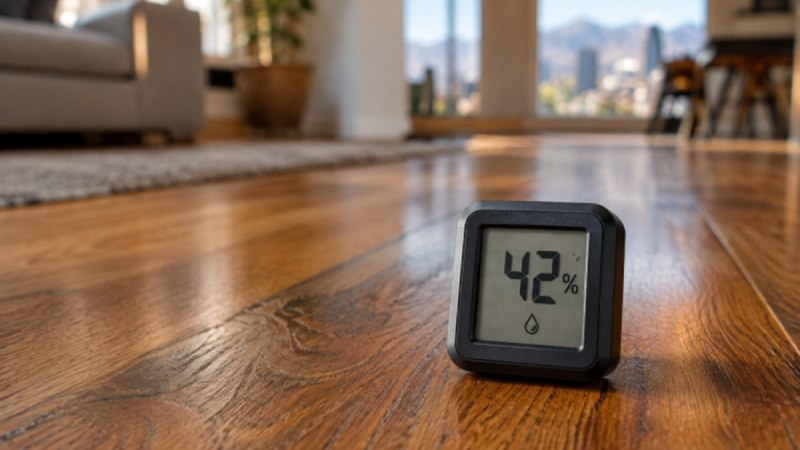
A small hygrometer gives homeowners a simple way to see whether indoor relative humidity is changing sharply. Many wood-flooring care recommendations point to a steady range of roughly 30 to 50 percent relative humidity, rather than a perfect number for every house. The goal is consistency.
The National Wood Flooring Association notes that dry conditions can contribute to gaps and splits, while stable temperature and humidity help limit seasonal movement. Its winter hardwood floor guidance also emphasizes prompt cleanup and entryway protection when snow and salt are part of daily life in Denver and Northern Colorado.
Winter Care for Snow, Salt, and Grit in Denver and Northern Colorado
Snow itself is not usually the main threat. The bigger concern is meltwater, road salt, sand, and grit that remain on the floor after people come inside. Fine debris can abrade a finish under shoes, especially in hallways, kitchens, and busy entry areas.
Build a better entry routine
- Place a coarse mat outside the entrance to remove snow and grit before people step indoors.
- Use an absorbent mat just inside the door to catch remaining moisture.
- Ask family members and guests to remove wet shoes or boots promptly.
- Wipe up melted snow, puddles, and salt residue as soon as possible.
Choose mats and rugs that can be lifted for regular cleaning and drying. A mat that stays wet for long periods can hold moisture against the finish, so inspect the floor beneath it periodically.
Clean Hardwood Without Adding Damage
Routine dry cleaning is one of the simplest ways to protect a floor. Dust mop regularly or vacuum with a soft-floor setting that will not scratch the surface. Use a cleaner approved for the particular finish, and apply it to a microfiber pad rather than pouring liquid directly onto the boards.
Steam mops, soaking-wet mops, harsh cleaners, and untested homemade mixtures can introduce too much moisture or leave a residue. When in doubt, follow the floor manufacturer’s care instructions.
A practical cleaning checklist
- Dust or vacuum entryways several times each week during high-traffic periods.
- Wipe spills right away, especially near pet bowls, exterior doors, and kitchens.
- Use felt pads under chair and table legs.
- Lift furniture instead of dragging it across the floor.
- Keep pet nails trimmed and wipe muddy paws before they cross the room.
Protect Floors From Denver’s Strong Sunlight
Bright sunlight can gradually change the appearance of natural wood and its finish. Rooms with large south- or west-facing windows often need the most attention in the Denver area. Curtains, shades, and UV-filtering window treatments can reduce direct exposure during the brightest parts of the day.
Area rugs can help in high-sun zones, but rotate them and move furniture occasionally. That practice helps avoid stark outlines where protected sections of flooring age differently from exposed sections. Some color variation is part of owning real wood, but sunlight can make it more noticeable.
Installation Planning for Northern Colorado Homes
Good long-term performance starts before the first board is installed. Flooring should be acclimated in controlled indoor conditions according to the product manufacturer’s requirements. Installers also need to evaluate indoor temperature and humidity, subfloor moisture, subfloor flatness, expansion space, and the suitability of the product for the room.
Solid and engineered hardwoods each have appropriate uses. Engineered products can offer added dimensional stability in certain settings, but they are not a substitute for moisture control or correct installation. The best choice depends on the product specifications, the subfloor, the room’s conditions, and the installation method.
When Seasonal Gaps Are Normal and When to Ask for Help
Small gaps that appear during a dry winter and lessen as indoor conditions moderate can be seasonal. A professional review is more appropriate when you notice gaps that remain through multiple seasons, curling or buckling boards, dark stains near doors or plumbing, loose boards, soft spots, finish peeling, or a sudden change after a leak or appliance failure.
Do not rush to fill gaps or sand a damaged area before identifying the moisture source. Cosmetic work performed before the underlying issue is corrected may not last.
A Simple Seasonal Floor Care Schedule for Denver and Northern Colorado
- Winter: Monitor humidity, use entry mats, and remove snowmelt, salt, and grit quickly.
- Spring: Check doors, windows, basements, and exterior walls for moisture after changing weather and snowmelt.
- Summer: Watch for signs of excess moisture, maintain comfortable indoor conditions, and manage direct sunlight.
- Fall: Test humidification equipment, replace worn mats, and prepare entryways for winter traffic.
Common Questions About Hardwood Floors in Denver and Northern Colorado
Why do hardwood floors get small gaps in winter?
Heated indoor air can become very dry in Denver and Northern Colorado homes. Wood may lose moisture and contract during the heating season. Small seasonal gaps may partly close when humidity becomes more moderate.
Can snow damage a hardwood floor?
Repeated meltwater, salt, sand, and foot traffic create more risk than occasional snow. Quick cleanup and effective mats reduce that exposure, particularly important in Denver’s winter environment.
Should a humidifier run all winter?
Monitor humidity rather than relying on one fixed setting. The appropriate setting depends on the home, outdoor conditions, HVAC system, and flooring manufacturer’s instructions, especially in Denver’s variable climate.
Stable Indoor Conditions Matter Most in Denver and Northern Colorado
Denver-area hardwood floors can perform beautifully through the seasons when homeowners manage indoor humidity, protect entryways, clean gently, limit harsh sunlight, and respond quickly to moisture. Seasonal movement is part of real wood. Lasting distortion or sudden changes are not something to ignore.