
When an air conditioner begins making unusual noises, cooling unevenly, or running longer than expected, an early service request can help identify the issue before comfort drops further. All Brevard Air & Heat provides A/C maintenance, repair, installation, replacement, ductwork, indoor air quality, and commercial HVAC support for properties in Brevard County.
Routine care is not a substitute for every repair, and a repair does not automatically mean replacement is necessary. The practical goal is to understand the system’s condition, correct identifiable problems, and choose an appropriate next step based on performance, age, repair history, and comfort needs.
Why Request A/C Maintenance From All Brevard Air & Heat?
An A/C maintenance request provides homeowners with a starting point when the system is still running but not operating normally. Addressing restricted airflow, inconsistent temperatures, recurring cycling, drainage concerns, or strange sounds early may help prevent a minor operational issue from becoming a larger interruption during hot weather.
All Brevard Air & Heat serves residential and commercial customers in Brevard County, Florida. A service visit can focus on preventive care, a specific cooling complaint, or a broader evaluation of the equipment and air distribution system. The right scope depends on what the system is doing, not simply on the unit’s age.
What Warning Signs Should Be Inspected?
Symptoms are useful clues, but they do not identify an exact cause on their own. For example, weak airflow can relate to a dirty filter, a blower issue, duct restrictions, or another condition. A professional inspection helps separate the symptom from the underlying problem.
Common Reasons to Request Service
- Grinding, squealing, banging, or other unfamiliar sounds.
- Weak airflow from supply vents or rooms that remain warmer than others.
- Long cooling cycles, frequent starts and stops, or an outdoor unit that runs without delivering adequate cooling.
- Water around the indoor equipment, visible drainage concerns, or musty odors.
- Unexpected increases in energy use when household routines have not changed substantially.
- Persistent indoor humidity or comfort concerns that may involve airflow, drainage, ductwork, or equipment operation.
What Does an A/C Maintenance Visit May Include?
Maintenance is intended to review the parts of a cooling system that influence safe operation, airflow, comfort, and reliability. The exact work needed varies by equipment type and condition, but a visit commonly includes several practical checks.
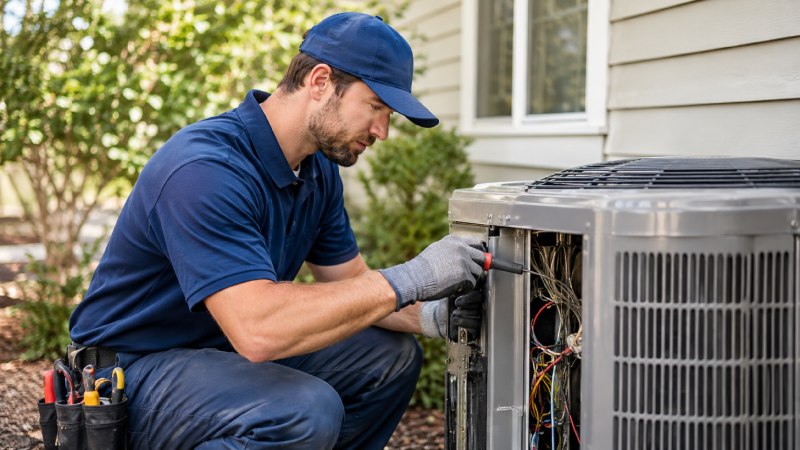
Photorealistic editorial studio shot of a qualified HVAC technician inspecting a residential central air conditioning unit with a diagnostic tool, clean uniform, controlled lighting, isolated subject, and a simple neutral background; polished commercial feel, no text or logos.
- Thermostat and operating review: The technician confirms that settings and system responses are appropriate.
- Filter and airflow inspection: Restricted filters, blocked grilles, and blower-related issues can place extra strain on a system.
- Coil and outdoor-unit inspection: Dirt and debris can interfere with heat transfer and airflow around the equipment.
- Electrical and control check: Connections, controls, and start-up behavior may be evaluated for proper operation.
- Condensate drainage review: A blocked drain can contribute to water problems and affect humidity control.
- Ductwork assessment: When uneven cooling or weak airflow is present, duct restrictions or leakage may warrant further attention.
The ENERGY STAR maintenance checklist for cooling equipment includes items such as thermostat checks, condensate drain inspection, electrical review, coil cleaning, and blower evaluation. It also notes that airflow problems can reduce system efficiency by up to 15 percent.
Should the System Be Repaired or Replaced?
Maintenance, repair, and replacement serve different purposes. A clogged drain, neglected filter, minor control problem, or isolated component issue may be best addressed with maintenance or a targeted repair. By contrast, repeated breakdowns, ongoing poor performance, or high ownership costs can justify a discussion of replacement.
How the Options Compare
- Maintenance or tune-up: Best for systems that are operating but need seasonal inspection, cleaning, or preventive attention.
- Targeted repair: Best when a specific fault is found, such as a drainage issue, electrical concern, airflow problem, or failed part.
- Replacement consultation: Useful for aging equipment with recurring failures, significant inefficiency, or major component concerns.
- New installation: Appropriate for replacement projects, new construction, or major renovations requiring properly selected equipment.
All Brevard Air & Heat can help compare these options in context. The decision should consider the system’s condition, expected repair needs, cooling performance, household goals, and budget rather than relying on a single rule of thumb.
Why Brevard County’s Climate Makes Maintenance Important
In Brevard County, air conditioning often plays a major role in both cooling and managing indoor moisture. Extended periods of warm, humid weather can increase runtime, while outdoor debris, dirty filters, drainage problems, and uneven air distribution may become more noticeable when the system is working hard.
Regular filter care and awareness of humidity are also sensible parts of home maintenance. The EPA explains that central heating and cooling filters can trap dust and other pollutants, and that high indoor humidity can increase the risk of mold growth. Its guidance on regularly changing filters and managing indoor humidity offers practical steps for maintaining indoor comfort. HVAC maintenance can support system operation, but it does not guarantee removal of every indoor pollutant or prevent every health concern.
What Can Homeowners Do Before Requesting Service?
Safe Steps to Take
- Confirm that the thermostat is set to cooling mode and the desired temperature is appropriate.
- Inspect the air filter and replace it if it is dirty or overdue.
- Keep supply vents and return grilles free of furniture, rugs, and other obstructions.
- Remove loose leaves and debris around the outdoor unit without opening the panels or touching any electrical components.
- Write down when the problem began, which rooms are affected, and any sounds, odors, leaks, or cycling patterns.
When to Stop Troubleshooting
Request professional service when water is leaking, a breaker repeatedly trips, the outdoor unit will not start, or the issue may involve wiring, motors, refrigerant, or sealed-system components. Clear notes about the symptoms can help All Brevard Air & Heat begin the diagnostic process efficiently.
Frequently Asked Questions
How often should A/C maintenance be scheduled?
Annual professional maintenance is a common starting point, preferably before the heavy cooling season. Filter checks may be needed more often depending on usage, pets, dust, occupancy, and manufacturer instructions.
Can All Brevard Air & Heat help if an A/C isn’t cooling?
Yes. An evaluation can investigate possible airflow, thermostat, coil, drainage, ductwork, electrical, or refrigerant-related concerns and identify the appropriate course of action.
Does the company serve commercial properties?
Yes. All Brevard Air & Heat provides HVAC support for homes and businesses in Brevard County, including maintenance, repairs, installation, replacement, and related comfort services.
Conclusion
When a cooling system shows signs of stress, an A/C maintenance request is a practical first step. All Brevard Air & Heat can help Brevard County homeowners and businesses understand the problem, evaluate the available options, and work toward dependable indoor comfort throughout 2026.